
How to Plan for Seasonal Revenue Dips in Trade Businesses
Learn how to manage seasonal revenue fluctuations in your plumbing, HVAC, or electrical business. Covers budgeting, diversification, and off-season strategies.
Emre Atci
Founder & CEO, Workslip
Every trade business has slow seasons. HVAC contractors dread the mild months of spring and fall. Landscapers watch revenue drop when winter arrives. Even plumbers and electricians see patterns — emergency calls spike in winter, but planned renovations slow during holiday periods.
The tradespeople who thrive year-round do not just survive the slow months — they plan for them. Seasonal revenue dips are predictable, which means they are manageable with the right strategies.
Understand Your Seasonal Pattern
Before you can plan, you need data. Look at your revenue from the past 12 to 24 months and identify:
- Peak months — When does revenue consistently exceed your monthly average?
- Slow months — When does it consistently fall below?
- The magnitude — How big is the swing? A 20% dip is manageable. A 60% drop requires serious planning.
If you do not have historical data, start tracking now. A job management app that records every job with dates and amounts gives you this data automatically.
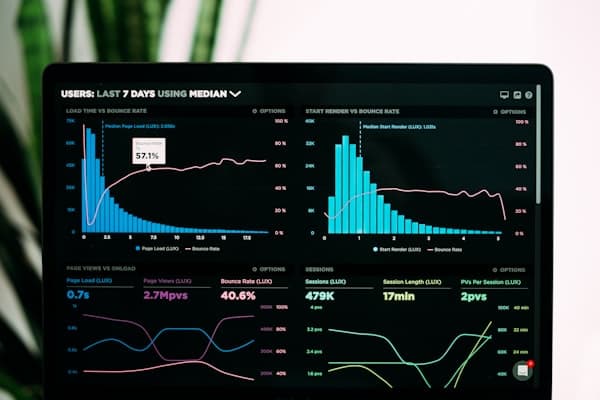
Export your last 12 months of job data and plot revenue by month. Most tradespeople are surprised by how predictable the pattern is once they see it visually. This chart becomes the foundation of your seasonal planning.
Common Seasonal Patterns by Trade
- HVAC — Peak in summer (cooling) and winter (heating). Slow in spring and fall.
- Plumbing — Busiest in winter (frozen pipes, heater failures) and during renovation season. Slower around major holidays.
- Electrical — Peaks during building booms and before holiday lighting season. Slower in mid-winter and mid-summer.
- Landscaping and outdoor — Peak in spring through fall. Near-zero in winter for cold climates.
- Cleaning — Relatively stable, with peaks around holidays and move-in/move-out seasons.
Strategy 1: Build a Cash Reserve During Peak Months
The simplest and most reliable approach is saving during the good months to cover the lean ones.
How to Calculate Your Reserve
- Determine your average monthly expenses (fixed costs plus minimum personal draw)
- Identify how many months are consistently below average
- Calculate the total shortfall across those months
- Add a 20% buffer for unexpected expenses
For example, if your monthly expenses are $8,000 and you have three slow months where revenue averages $5,000, your shortfall is $9,000 plus buffer — roughly $11,000. That is what you need in reserve before the slow season starts.
The Discipline of Saving
During peak months, it is tempting to increase personal spending or make large purchases. Resist this. Set up a separate savings account and transfer a fixed percentage of peak-season revenue into it automatically. Think of it as paying your slow-season self.
Strategy 2: Diversify Your Services
If your core service is seasonal, adding complementary services that peak at different times smooths out revenue.
HVAC Examples
- Peak season: Installation and emergency repairs
- Off-season: Duct cleaning, indoor air quality assessments, preventive maintenance plans
Plumbing Examples
- Peak season: Emergency repairs, water heater replacements
- Off-season: Bathroom renovations, water filtration installations, commercial maintenance contracts
Electrical Examples
- Peak season: New construction wiring, renovation work
- Off-season: Safety inspections, smart home installations, energy audits
The key is choosing services that use your existing skills and equipment so the investment in diversification is minimal.
Strategy 3: Push Maintenance Plans Hard Before the Slow Season
Maintenance plans create predictable, scheduled revenue that fills your calendar during months when emergency calls dry up.
Two to three months before your slow season, market aggressively:
- Email your customer database with a seasonal maintenance offer
- Post on social media about the importance of preventive maintenance
- Offer a limited-time discount for customers who sign up before the deadline
- Bundle maintenance with a small perk (priority scheduling, discount on future repairs)
Even 30 maintenance plan customers at $200 each gives you $6,000 in scheduled revenue during your slowest months. That alone can cover the gap.
Strategy 4: Use Slow Months Productively
If fewer jobs are coming in, use the downtime to invest in activities that generate future revenue:
Business Development
- Refresh your website and update your Google Business Profile
- Create marketing content (photos, videos, blog posts)
- Reach out to past customers who have not booked in over a year
- Network with real estate agents, property managers, and complementary trades
Operations Improvement
- Document your standard operating procedures
- Train on new skills or certifications
- Service and organize your tools and vehicle
- Review and negotiate supplier contracts
- Set up or improve your field service software
Financial Housekeeping
- Review your pricing and adjust for the coming year
- Meet with your accountant for mid-year tax planning
- Evaluate insurance coverage
- Analyze job profitability data and cut unprofitable services
Strategy 5: Adjust Your Pricing Seasonally
Demand-based pricing is common in hospitality and travel, and it works for trades too.
- Peak season — Charge a premium for emergency and same-day service. Customers expect to pay more when demand is high.
- Slow season — Offer modest discounts on planned work to stimulate demand. A 10% discount on a water heater replacement scheduled for your slowest month is better than no work at all.
- Shoulder season — Regular pricing, but promote booking incentives to pull work forward from peak into shoulder months.
Be transparent about pricing. Customers appreciate honesty: "If you can schedule this for March instead of January, we can offer a better rate because our schedule is more flexible."
Strategy 6: Reduce Fixed Costs Where Possible
Audit your expenses and identify costs you can scale down during slow months:
- Part-time staff — If your employees are underutilized, consider flexible scheduling or seasonal contracts
- Vehicle fleet — Can you temporarily return a leased vehicle during off-season?
- Subscriptions — Pause or downgrade services you do not need year-round
- Marketing spend — Shift budget from acquisition to retention during slow months (cheaper and higher ROI)
The goal is not to cut everything — it is to align expenses with revenue so your profit margin stays healthy even when the top line dips.
See your revenue patterns clearly
Workslip's reporting dashboard shows your monthly revenue, job volume, and trends so you can plan for seasonal shifts with confidence.
The Long View: Three Years of Seasonal Data
Your first year of tracking gives you a rough pattern. Two years confirm it. Three years make it predictable. The longer you track, the more precisely you can budget, hire, and market around your seasonal cycle.
Trade businesses that plan for seasonality do not just survive the slow months — they use them strategically to build a stronger business for the next peak.
Related Articles
 Business Tips
Cash Flow Management Tips for Tradespeople
Practical cash flow management strategies for plumbers, electricians, and HVAC technicians. Learn how to invoice faster, reduce late payments, and stay profitable.
 Business Tips
How to Price Field Service Jobs: A Complete Guide for Tradespeople
Learn proven strategies for pricing your plumbing, electrical, HVAC, and cleaning jobs. Covers hourly vs flat-rate, markup formulas, and common mistakes to avoid.
 Business Tips
How to Scale From Solo Tradesperson to a Team of 5
A roadmap for growing your one-person trade business into a team of five. Covers systems, hiring stages, delegation, and the mindset shift required to scale.